
Key Takeaways
- Eco friendly ecommerce packaging involves replacing single-use plastic mailers, bubble wrap and foam with recyclable, biodegradable or compostable materials.
- ‘Recyclable’, ‘biodegradable’ and ‘compostable’ are not interchangeable terms — each describes a different end-of-life outcome.
- India’s EPR for Packaging Rules now hold e-commerce brand owners directly responsible for their packaging footprint.
- Right-sizing boxes and switching void fill can cut both material use and shipping costs at the same time.
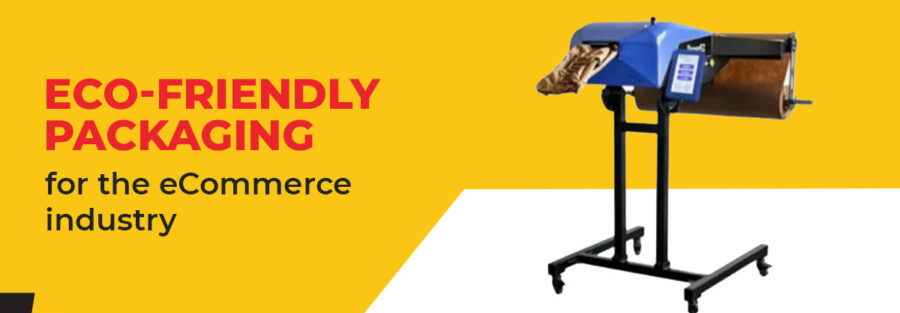
- Durapak’s carton, strapping and protective packaging machinery lets brands adopt sustainable materials at scale.
Intro: What Is Eco-Friendly eCommerce Packaging?
Every parcel that leaves a warehouse either adds to landfill or feeds back into a circular economy. That single choice is what eco friendly ecommerce packaging is about. It means designing mailers, cartons and void fill from materials that are recyclable, biodegradable or compostable, rather than from virgin plastic that lingers for centuries.
The World Economic Forum has flagged packaging waste as one of the fastest-growing categories of municipal solid waste, driven largely by parcel volumes. Retailers now sit at the centre of this issue: every order they ship is a packaging decision. Getting eco-friendly ecommerce packaging right protects the planet, satisfies regulators and, increasingly, wins the sale.
Beyond the material itself, sustainable packaging also covers box sizing, tape choice, printing inks and how easily a customer can dispose of what arrives at their door.
Why Does Sustainable Packaging Matter for Online Retailers?
Shoppers are no longer neutral about what their orders arrive in. Sustainable e-commerce packaging has become a purchase driver in its own right, not just a back-office cost line.
Consumer demand is the clearest signal. According to research, there is a significant majority of people who now prefer products that come in packaging material made out of cardboard or paper rather than plastic because they are aware of its low environmental footprint — there was a survey conducted by the industry in 2024 which showed that nearly 80 percent of people would buy products packed in cardboard/paper for this reason alone.
There are two trends that are driving brands to make green packaging their preference for e-commerce:
1. Consumer Expectation
Customers actively seek recyclable/plastic-free packaging before completing their purchase.
2. Regulation
Plastic packaging bans/EPR targets continue to get stricter in countries like India and the EU.
The Hidden Cost of Conventional eCommerce Packaging Waste
Conventional packaging carries costs that rarely appear on an invoice: landfill fees, brand damage and compliance risk.
Stat Block: The Scale of the Problem
| Metric | Figure |
| Global e-commerce parcels shipped (2023) | ~167 billion |
| Projected e-commerce plastic packaging waste | Over 2 million tonnes |
| UK packaging waste generated annually | 11.7 million tonnes |
| UK packaging waste still landfilled/incinerated | Over 4 million tonnes |
| Global plastic packaging recycled | Only 9% |
This table shows why plastic-heavy mailers and void fill are under growing scrutiny from regulators and shoppers alike.
Returns compound the problem further, since each returned parcel often needs fresh packaging for resale, doubling material use on a single order.
Recyclable vs Biodegradable vs Compostable: What’s the Difference?
This is one of the most confused terms in eco-friendly packaging solutions for online stores, so it is worth defining plainly.
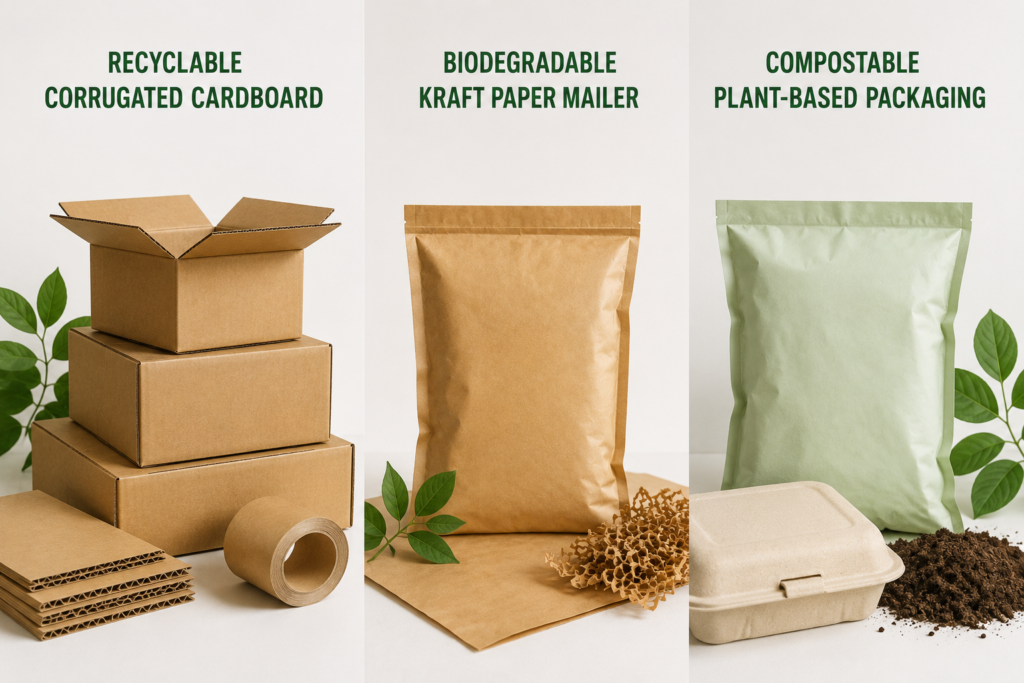
Recyclable
The material can be processed to produce other items by existing recycling plants in municipalities and industries (e.g., corrugated cardboard, kraft paper).
Biodegradable
The material breaks down naturally over time through microbial action, though timeframes and conditions vary widely.
Compostable
A stricter subset of biodegradable; the material breaks down into nutrient-rich matter within a defined period under composting conditions, often to a certified standard.
Definition Box:
A recyclable box becomes raw material again. A biodegradable mailer eventually disappears. A compostable mailer is one that generally goes away and adds to soil in a certified period of time.
Confusing these terms on packaging labels is also a compliance risk. India’s plastic rules now recognise compostable packaging certified under IS 17088 as meeting obligations differently to standard recyclable plastic, so accurate labelling matters both for shoppers and for regulators.
Eco-Friendly Packaging Materials for E-Commerce
Choosing the right eco-friendly packaging materials depends on the product being shipped, its fragility and the customer’s likely disposal options.
| Material | Best for | Pros | Cons |
| Corrugated cardboard | Boxes, cartons | Widely recyclable, FSC-certified options available | Bulkier than film-based mailers |
| Kraft paper | Mailers, wrap, void fill | Recyclable, compostable, lightweight | Lower moisture resistance |
| Moulded pulp | Fragile item inserts | Compostable, custom-moulded protection | Higher tooling cost for custom shapes |
| Recycled PET/plastics | Poly mailer alternatives | Diverts existing plastic waste | Still plastic at end of life |
| PLA-based films | Compostable mailers | Plant-based, compostable | Needs industrial composting facilities |
This table compares common eco-friendly materials against their typical e-commerce use case.
Corrugated boxes and kraft paper remain the default choice for most online retailers because recycling infrastructure for them is already mature almost everywhere.
Sustainable Protective Packaging: Greener Alternatives to Bubble Wrap and Foam
Protective packaging is where plastic has historically been hardest to remove, since bubble wrap and expanded foam are cheap and effective. Greener alternatives now perform comparably in most cases.
Moulded Pulp Inserts
Formed from recycled paper fibre to accommodate specific product sizes.
Corn Starch Void Fill
A biodegradable loose fill that is water soluble and replaces polystyrene chips.
Air-free Paper Crumple Fill
A recyclable paper alternative to air wedges.
Conditioned Advice
If you are shipping fragile electronics or glassware, moulded pulp inserts come closest to mimicking the performance of foam. If you’re shipping lightweight apparel or soft goods, kraft paper void fill is often sufficient and less costly.
Read more: Choosing the right protective packaging is only part of the solution. Improper stretch wrapping can also lead to damaged shipments and material waste. Explore our blog, 4 Common Reasons for Stretch Film Breaking, to learn the common causes of film breakage and practical ways to improve packaging performance.
Right-Sizing: Cutting Waste through Smarter Packaging Design
Right-sizing means sizing boxes to the product, not falling back on a handful of standard sizes. It is one of the simplest levers for sustainable shipping/mailer packaging.
Oversized boxes waste material, need more void fill, and increase dimensional weight charges from couriers, so right-sizing typically lowers both waste and freight cost at once.
Numbered Mistakes to Avoid
1. Using one box size for all SKUs regardless of product dimensions.
2. Resizing the box instead of filling the void.
3. Dimensional weight pricing is not taken into account when choosing cartons.
4. Not testing the strength of the box after thinning the material.
Strapping and Closures for Shipments – Eco-Friendly
Closures and strapping are often ignored in sustainability audits, but they affect nearly every parcel and pallet leaving a warehouse.
Water-activated paper tape is 100% recyclable along with the box it seals, while plastic tape contaminates the recycling streams and must be hand-pulled. An eco-friendly strap using recycled or lighter-gauge material reduces plastic use for palletised shipments but still secures loads through automated strapping machinery.
Sustainable, Safe, and Cost-Effective
Decisions around sustainability rarely happen in a vacuum — they’re competing against damage rates, shipping costs and customer experience.
Before / After Comparison
| Factor | Conventional Packaging | Eco-Friendly Packaging |
| Material | Plastic mailers, foam, poly tape | Corrugated, kraft, moulded pulp, paper tape |
| End of life | Landfill, low recycling rate | Recyclable, biodegradable or compostable |
| Regulatory exposure | Rising EPR and plastic-ban risk | Aligned with EPR and compostability standards |
| Customer perception | Neutral to negative | Positive, unboxing-friendly |
| Cost driver | Cheaper material, higher waste cost | Often offset by right-sizing savings |
This table sets out the practical trade-offs brands weigh when switching material families. The realistic approach is rarely all-or-nothing: many brands migrate category by category, starting with mailers and tape before moving to protective inserts.
How to Switch to Eco-Friendly Packaging: A Practical Checklist
A structured transition avoids the two common failure modes: switching everything at once and blowing the budget, or switching nothing and losing customer trust.
1. Audit current packaging
List every material used per SKU, including tape and void fill.
2. Identify the biggest-volume item
Usually the standard mailer or carton — and switch that first.
3. Right-size box tiers
Reduce the number of standard sizes and match them closely to products.
4. Replace plastic tape
Replace plastic tape with water-activated paper tape.
5. Trial paper-based void fill
Trial paper-based void fill on non-fragile SKUs before rolling out fully.
6. Check compliance
Confirm materials meet EPR and any compostability certification claims made on-pack.
7. Communicate the change
Label packaging clearly so customers know how to recycle or compost it.
How Does Durapak Support Sustainable eCommerce Packaging?
Durapak is a Chennai-based manufacturer and supplier of protective packaging machinery, with two decades of experience serving online retail, D2C and logistics clients. Rather than selling packaging materials directly, Durapak equips warehouses with the machinery that makes eco-friendly formats viable at scale: carton erectors and taping machines set up for recyclable corrugated boxes and water-activated paper tape; strapping machines and tools configured for lighter, recycled strap; and protective packaging machines that apply paper-based cushioning instead of plastic film wherever a customer wants to reduce single-use waste.
For growing e-commerce operations, that machinery layer matters as much as the material choice itself: a warehouse can only switch to paper tape or right-sized cartons as fast as its equipment allows. Brands exploring eco-friendly e-commerce packaging at volume can review Durapak’s carton, strapping and protective packaging machine ranges to plan a practical transition.
Conclusion
Packaging is one of the few supply-chain decisions a customer actually holds in their hands, which is exactly why eco-friendly e-commerce packaging carries so much weight for online retailers today. Between rising parcel volumes, tightening EPR rules and shoppers who actively favour paper over plastic, the case for switching materials is no longer just environmental; it is commercial.
The most realistic path is incremental: audit current usage, right-size cartons, swap plastic tape for paper, and trial compostable void fill before a full rollout. Brands that need the machinery to make that switch at warehouse scale can reach out to us.
| CTA Ready to switch to sustainable packaging? Partner with Durapak for eco-friendly packaging solutions and reliable packaging equipment that help reduce waste while protecting every shipment. Contact Durapak today to get started. |
FAQs
1. What is sustainable e-commerce packaging?
Eco-conscious ecommerce packaging uses recyclable, biodegradable or compostable materials such as corrugated board, kraft paper and moulded pulp, instead of single-use plastic mailers and foam. It reduces landfill waste while still securing the goods being shipped. Retailers use it because of regulations and shopper demand.
2. The packaging is biodegradable; can it be recycled?
No. Today’s recycling systems turn recyclable packaging into new products. Biodegradable packaging just naturally decomposes over time, whether it is recycled or not. The two describe different pathways to the end of life, not the same outcome.
3. What materials count as eco-friendly for online stores?
Common choices include corrugated cardboard, kraft paper, moulded pulp inserts, recycled PET plastics and PLA-based compostable films. The choice of materials is determined by the fragility of the product, its weight and expected disposal route at the customer’s site.
4. Are paper mailers as strong as poly mailers?
Quality kraft paper mailers can match poly mailers for most lightweight goods, especially with reinforced seams. Often, heavier or moisture-sensitive items are packaged in paper mailers with a compostable inner liner for added protection.
5. Is eco-friendly packaging more expensive than plastic?
Material cost per unit can be slightly higher, but right-sizing boxes and reducing void fill often offsets this. For many brands, the total cost of shipping and waste disposal stays the same or even goes down once packaging has been optimised.
6. What’s the difference between biodegradable and compostable packaging?
Biodegradable packaging is naturally broken down, but there is no guarantee on the timing or the nutrients. Compostable packaging, a stricter and often certified subset, breaks down in a set time into usable compost under composting conditions.
7. How does EPR affect e-commerce packaging in India?
Under India’s EPR for Packaging Rules, brand owners and e-commerce players are required to register with the CPCB, report their packaging volumes and meet recycling or composting targets. A more compliant burden option is certified compostable or recyclable material.
8. What is right-sizing in packaging?
Right-sizing is about having the right box sizes for the product you’re shipping, not one box size for everything. It reduces material use, decreases the need for void fill and often decreases dimensional-weight shipping charges from couriers.
9. What are the sustainable alternatives to bubble wrap for shipping?
Alternatives to bubble wrap are honeycomb paper wrap, moulded pulp inserts and corn-starch-based loose fill. Each cushions different items differently, so the best choice will depend on the fragility and shape of the product.
10: What is the difference between a semi-automatic and a fully automatic strapping machine?
A semi-automatic strapping machine requires the operator to manually insert the strap before the machine tensions, seals, and cuts it. A fully automatic strapping machine performs the entire process automatically as products move through the production line.