
Short Summary
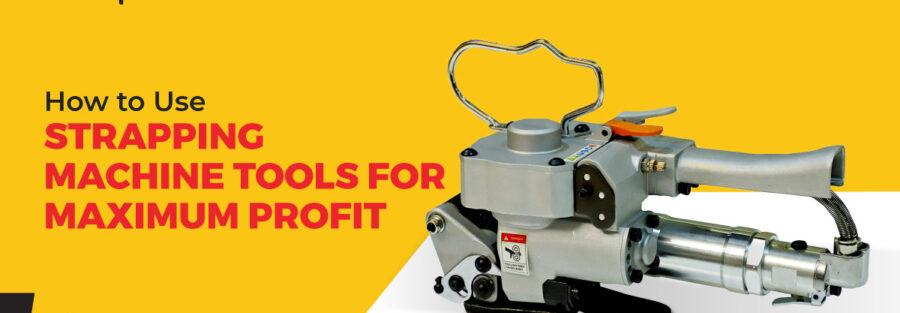
Learning how to use strapping machine tools correctly can significantly improve packaging efficiency, reduce material waste, lower labour costs, and minimise shipping damage. Whether you’re using a semi-automatic or fully automated strapping machine, proper setup, operation, and maintenance can directly impact profitability.
Let’s learn how strapping machines work, how to operate them effectively, and practical ways manufacturers can maximise their return on investment.
What Is a Strapping Machine and Why Correct Usage Impacts Your Bottom Line
A strapping machine is a packaging tool that secures cartons, bundles, pallets, and corrugated boxes using PP (polypropylene) or PET strap, tensioning, sealing, and cutting it in one continuous cycle. It’s the last checkpoint before a product leaves the warehouse or distribution centre, which makes it one of the highest-leverage points in the entire packaging line for controlling cost.
Every strapping machine relies on a few core components:
- Strap dispenser/coil holder – feeds strap into the machine
- Tensioner – tightens the strap around the load.
- Sealer – joins the strap ends via heat seal or friction weld
- Cutter – trims excess strap
- Control panel or foot pedal – triggers and adjusts the strapping cycle
When these components are set up and used correctly, packaging efficiency improves across the board. When they’re not, the effects show up as strap wastage, weak seals, inconsistent load stability, and, eventually, customer complaints. In other words, learning how to operate a strapping machine properly isn’t optional maintenance trivia; it’s a direct input into your cost per pack.
Types of Strapping Machines: Choosing the Right One for Profitability
Not every operation needs the same equipment, and choosing the wrong type is one of the most common (and costly) mistakes businesses make.
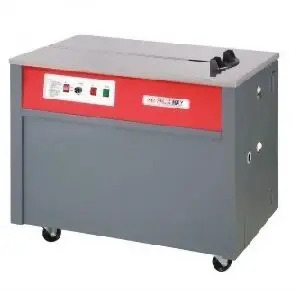
- Semi-automatic strapping machines require the operator to position the strap around the load manually, but the machine handles tensioning, sealing, and cutting automatically. These suit low-to-medium-volume operations where flexibility matters more than raw speed.
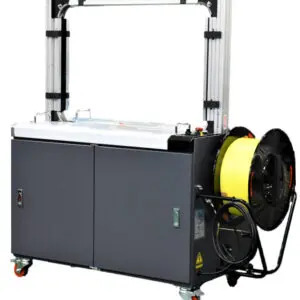
- Fully automatic strapping machines feed, tension, seal, and cut the strap with minimal operator input, making them ideal for high-volume production lines where consistent throughput and minimal labour dependency are most important.
The right choice depends on packaging volume, load type, and how much labour dependency you’re willing to accept. A business running a handful of pallets a day doesn’t need a fully automatic line – but a high-throughput distribution centre will lose money without one.
PP vs PET Strap: Picking the Consumable That Cuts Costs
Strap choice affects cost and load security just as much as the machine itself.
- PP strap (polypropylene) is lightweight, economical, and suited to light-to-medium cartons and general packaging. It’s the most commonly used poly strapping for standard shipping needs.
- PET strap offers significantly higher tensile strength and retains tension over time, making it better suited to heavy-duty packaging, palletised loads, and long-distance transit where straps are prone to loosening.
- Steel banding tools are reserved for extreme-duty applications — heavy machinery, metal coils, or construction materials — where poly strapping isn’t strong enough.
Strap width and thickness also matter. Wider, thicker straps distribute tension more evenly and reduce the risk of cutting into cartons, but they add to material cost, so matching strap specification to load type (rather than defaulting to the thickest option “just in case”) is where real savings happen.
How to Use a Strapping Machine: Step-by-Step Operating Guide
Whether you’re running a semi-automatic or fully automatic strapping machine, the fundamentals of correct operation are the same.
Step 1: Select the Right Strap. Match strap type and width to product weight, shape, and transit conditions. Irregular or heavy products typically need a PET strap and higher tension settings; standard cartons are usually fine with a PP strap.
Step 2: Load the Coil Correctly. Improper strap loading is one of the most common causes of downtime. Align the strap roll on the dispenser, follow the correct threading path through the tensioner and sealer, and check for twists before running the machine.
Step 3: Adjust Tension Settings. Tension control is where most strapping machine operating instructions get skipped and where most problems start. Too much tension crushes cartons and snaps straps; too little leaves loads loose and unstable in transit. The right setting secures the load without deforming it.
Step 4: Position the load centre, the product, within the strapping arch, keeping the strap path clear of obstacles. Consistent positioning is what keeps strap placement — and seal quality — consistent from one pack to the next.
Step 5: Start the Strapping Cycle. On a semi-automatic strapping machine, this usually means triggering tensioning and sealing via a foot pedal once the strap is positioned. On a fully automatic strapping machine, the cycle runs with minimal manual input once the load enters the strapping zone.
Step 6: Inspect the Seal. Every cycle should end with a quick check of weld strength and seal quality – whether the machine uses a heat seal or a friction weld. A weak seal is invisible until the load is in transit, at which point it becomes a shipment failure.
Setting Tension and Seal Strength for Zero Wastage and Zero Damage
This is the operational core of using a strapping machine profitably. Tension and seal quality determine whether a properly chosen strap actually does its job.
- Heat sealing melts the strap ends together and is common on semi-automatic and fully automatic machines using PP or PET straps; it produces a strong, consistent bond when temperature and dwell time are set correctly.
- Friction welding generates heat through rapid friction between overlapping strap ends, commonly used on portable strapping tools. Weld strength here depends on consistent pressure and cycle time.
Getting tension and seal settings right reduces strap wastage (fewer failed seals means less re-strapping), lowers cost per pack, and directly reduces damaged-goods and load-stability issues. It’s a small operational adjustment with a disproportionately large effect on packaging line efficiency.
Maintenance and Troubleshooting to Avoid Costly Downtime
Even a well-chosen strapping machine underperforms without upkeep. A simple maintenance rhythm prevents most common issues:
Daily: Clear dust and debris, check the strap path, and inspect the sealing unit.
Weekly: Lubricate moving parts, inspect belts and rollers, and verify tension is holding consistent settings.
Monthly: Check electrical components and sensors and replace worn parts before they fail mid-run.
Common issues – misfeeds, weak welds, jams, or inconsistent tension almost always trace back to skipped maintenance, incorrect strap loading, or worn components. Preventive maintenance is far cheaper than the downtime it avoids.
| Bonus Tip: According to OSHA Machine Guarding Standards (1910.212), before every shift, confirm that all machine guards and interlocks are in place and functioning, not just clean. A 30-second guard check costs nothing but can prevent both an injury claim and hours of lost production. |
Safety Guidelines for Strapping Machine Operators
Strapping machines use tension, heat, and moving elements; hence operator safety should never be overlooked:
- Keep hands clear of the strapping arch during the cycle
- Never bypass safety guards or interlocks
- Wear cut-resistant gloves when handling strap coils or cut ends
- Ensure operators are trained on the specific machine type, semi-automatic or fully automatic, before independent use
- Follow lockout procedures during maintenance
Proper training reduces both injury risk and the operator errors that lead to strap wastage and weak seals in the first place.
How Proper Strapping Directly Increases Your Profit Margins
Once the mechanics are right, the profit case is straightforward. Correct strapping machine usage doesn’t just tidy up your packaging line; it shows up directly on your cost sheet.
1. Lower labour costs:
Automated tensioning and sealing reduce manual effort at the strapping station, letting fewer operators handle more volume without added strain. Over a full shift, that difference compounds into real savings on labour spend, especially in high-volume operations.
2. Higher throughput:
Manual strapping can take 30–60 seconds per package, while automatic machines complete the same task in a few seconds. Multiplied across hundreds or thousands of packages a day, this speed difference directly improves packaging line efficiency and lets your production line keep pace with output upstream instead of bottlenecking at the end.
3. Reduced product damage:
Correctly tensioned, well-sealed straps keep loads stable through the supply chain, from the warehouse floor to the delivery dock. That stability cuts crushed cartons, shifted pallets, customer returns, and costly damage claims that eat into margins long after the product has shipped.
4. Lower material waste:
Precise tension control means fewer failed straps, less re-strapping, and less rework, steadily reducing cost per pack over time.
5. Better warehouse operations:
Properly strapped pallets and cartons stack, store, and move more efficiently, improving space utilisation and material handling throughout the warehouse.
The important part: none of this requires new equipment if you already own a strapping machine. It simply requires using the one you have correctly.
Choosing the Right Strapping Setup for Your Business
If your current setup is creating more downtime, waste, or damage claims than it should, the issue is often a mismatch between machine type, strap consumable, and actual packaging volume, not the operators.
At Durapak, we help manufacturers and distributors match the right semi-automatic or fully automatic strapping machine to their product type, load weight, and logistics requirements, along with the PP or PET strap that fits their packaging line. Explore our full range of strapping machines to find the setup that reduces cost per pack and improves load security for your operation.
Conclusion
Learning how to use a strapping machine correctly is one of the simplest ways to improve profitability without overhauling your production process. Choosing the right strap, loading it correctly, setting tension and seal strength properly, and following a consistent maintenance routine all contribute to measurable savings, lower material waste, fewer damage claims, and faster throughput.
Every properly strapped load is a small contribution to a bigger outcome: safer transportation, better warehouse operations, and lower logistics costs. Treated correctly, strapping stops being a routine end-of-line task and becomes a genuine competitive advantage.
Frequently Asked Questions
1. How to use a semi-automatic strapping machine?
Load the strap coil, thread it through the tensioner and sealer, and position your load in the strapping arch. Manually wrap or guide the strap around the package, then trigger the foot pedal to start tensioning and sealing. The machine automatically tensions, seals, and cuts the strap once triggered.
2. How to use a fully automatic strapping machine?
Place the load on the conveyor or strapping station and let the machine detect it automatically. The system feeds, tensions, seals, and cuts the strap with minimal operator input. Just monitor the cycle and inspect the seal quality periodically.
3. How do I use a strapping machine correctly?
Choose the right strap, load it properly, and adjust the tension before starting. Position the package correctly, run the strapping cycle, and inspect the seal. Correct usage improves speed, reduces damage, and lowers material waste.
4. What is a strapping machine used for?
It secures cartons, bundles, pallets, and products using PP or PET straps. This keeps packages stable during storage, handling, and transportation. It’s a critical step in reducing shipping damage.
5. How does a strapping machine increase profit?
It reduces manual labour, improves packaging speed, and lowers product damage. It also minimises strap waste and improves warehouse efficiency. Together, these cut overall packaging and logistics costs.
6. What type of strap should I use?
PP strap suits lightweight cartons and general packaging needs. A PET strap is better for heavier loads and long-distance transit. Steel banding is reserved for heavy-duty industrial applications.
7. Why does tension setting matter?
Too much tension damages cartons or breaks the strap. Too little causes loose loads and shifting during transit. Correct tension secures the package without causing damage.
8. How often should a strapping machine be maintained?
Clean it and check the strap path daily. Lubricate parts and inspect rollers weekly. Check electrical components and sensors monthly to prevent downtime.
9. What are common mistakes when using a strapping machine?
Choosing the wrong strap and applying excessive tension are frequent errors. Incorrect loading and ignoring seal quality also cause problems. Skipped maintenance and poor operator training compound these issues.
10. How do I choose the best strapping machine for my business?
Base your decision on product size, load weight, and packaging volume. Factor in strap type, available space, and automation needs. Prioritise a machine that improves speed and reduces labour dependency.